
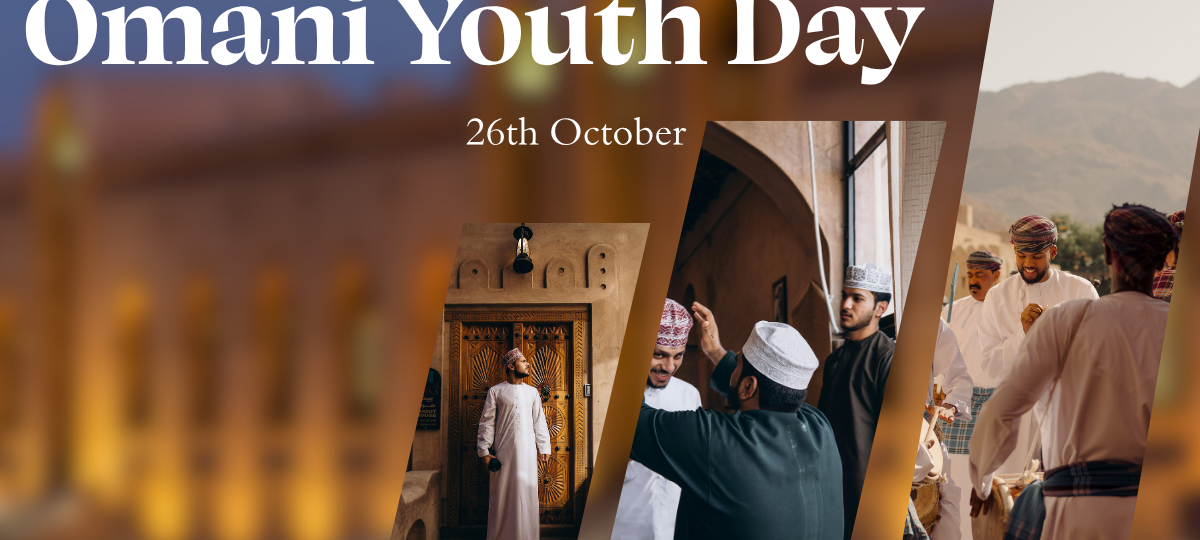
Omani Youth Day, observed annually on October 26, is an occasion to renew confidence in the capabilities of young people and to reflect on the responsibility of institutions to transform this confidence into tangible opportunities for learning, work, and leadership. Celebrating youth takes on true meaning when young people find a space to express their opinions, an environment that nurtures their skills, and an institution that believes in their ability to contribute to shaping the future of their country.
His Majesty Sultan Haitham bin Tariq Al-Mu’azzam—may God protect and preserve him—laid a clear foundation for viewing youth as a pillar of development in his royal address on February 23, 2020, upon assuming the throne: “Youth are the wealth of nations and their inexhaustible resource; they are the hands that build; they are the nation’s present and its future.” His Majesty emphasized his commitment to listening to them and understanding their needs, interests, and aspirations, thereby establishing an approach based on communication, participation, and nurturing their ambitions.
From a human resources perspective, this approach can be translated into an institutional commitment that begins with understanding young people’s capabilities, providing them with opportunities, and aligning their professional development with the organization’s goals. Listening should lead to decisions; training to applicable skills; and assignments to clear responsibilities and appropriate authorities. When a young employee sees the impact of their suggestion in improving a procedure or developing a service, their self-confidence and sense of belonging to the organization are strengthened, and they become more willing to take the initiative and assume responsibility.
Oman Vision 2040 provides this approach with a comprehensive national framework; its priorities include education, learning, scientific research, national capabilities, and the labor market and employment, and it aims for an economy based on knowledge, innovation, and entrepreneurship. Consequently, the relationship between youth empowerment and the realization of the vision hinges on the quality of human capital development and the ability of organizations to harness individuals’ knowledge and skills to generate sustainable economic and social value.
Here, the responsibility of human resources departments expands to include anticipating required skills, identifying talent, developing leaders, and designing fair and clear career paths. Organizations can start with individualized development plans for young people, career mentoring programs that pair them with experienced professionals, and opportunities for cross-departmental mobility and participation in projects. Performance management should also be linked to clear objectives and continuous feedback, helping employees improve, identifying their needs, and providing them with a clear vision of what they can achieve within the organization.
Innovation remains one of the most important areas of this empowerment. This is reflected in the focus on developing the creative economy and training national talent in modern technologies, as well as the opportunities this opens up for young people to develop innovative projects and solutions. Organizations can draw inspiration from this approach by setting aside time to develop ideas, forming cross-functional teams, and allocating resources to test solutions and measure their results.
Innovation sometimes begins with an everyday challenge noticed by a young employee: a time-consuming procedure, a service that needs simplification, or data that can be leveraged to improve decision-making. When equipped with the knowledge, tools, and managerial and financial support, they can turn their observation into a development project. This highlights the importance of developing analytical, critical thinking, and communication skills—along with digital skills and the responsible use of artificial intelligence—and linking them to actual business needs.
In the field of entrepreneurship, it is crucial to develop an integrated national ecosystem that helps organizations grow and expand. From a human resources development perspective, young entrepreneurs need skills in team management, financial planning, marketing, negotiation, and understanding customer needs. This requires the integration of the roles of supporting organizations, educational institutions, and major companies to provide guidance, expertise, and access to markets, in addition to funding.
Social media also provides a platform to highlight youth initiatives and showcase their value; this presence can be built upon by connecting initiative leaders with organizations, incubators, and experts, and by transforming their digital presence into opportunities for collaboration, learning, and growth.
Young people, for their part, bear the responsibility of capitalizing on these opportunities through continuous learning, discipline, mastery, and initiative. The trust bestowed by leadership is repaid through hard work, and the opportunities provided by an organization grow through merit. On Omani Youth Day, we are all reminded of our shared responsibility to build environments where talented young people can learn, innovate, and lead—so that their aspirations become achievements that contribute to realizing the Oman 2040 Vision and enhance the economy’s competitiveness and the sustainability of development.
May every year bring renewed ambition to the youth of Oman, and may their contributions shape the future.